
Description
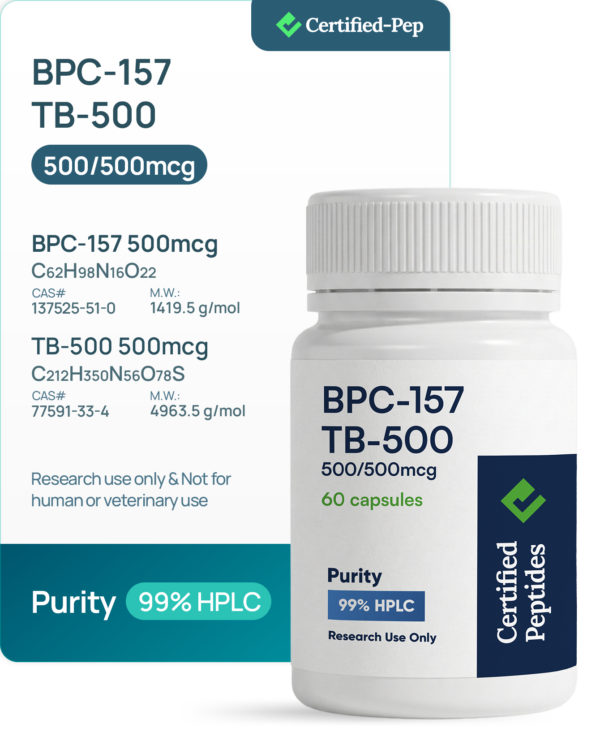
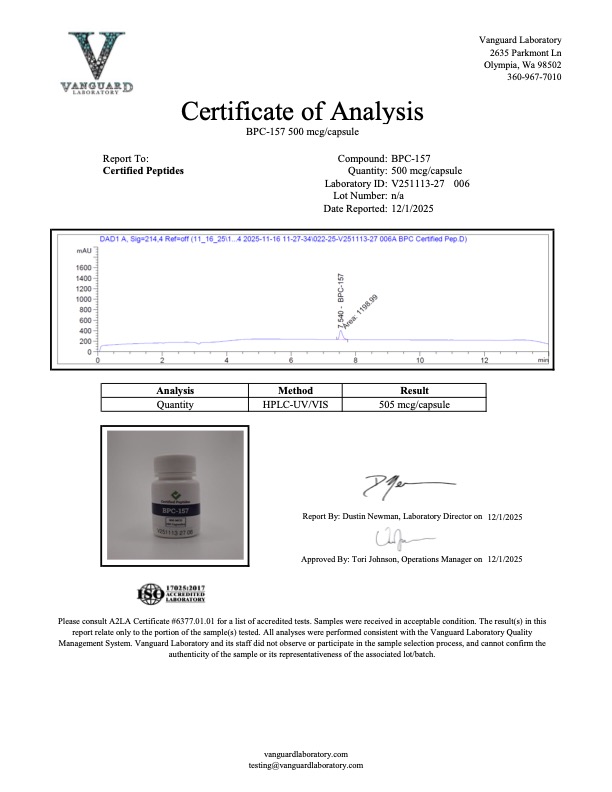
BPC-157 is a synthetic peptide fragment derived from a naturally occurring protein found in gastric juices that has been widely examined in preclinical research for its influence on tissue repair, angiogenesis, inflammatory modulation, and cellular protection. Its activity is not hormone-based, but instead associated with regulatory effects on growth-factor pathways, nitric oxide signaling, and cytokine balance.
In experimental models, BPC-157 has demonstrated the ability to support structural and functional recovery across a variety of tissues, including muscle, tendon, ligament, vasculature, and gastrointestinal mucosa. Its proposed mechanisms involve up-regulation of angiogenic factors, stabilization of microvascular integrity, modulation of nitric oxide pathways, and attenuation of pro-inflammatory cytokines.
Research interest in BPC-157 encompasses several domains, including:
- Tissue repair and regeneration, particularly in tendon, ligament, and muscle models
- Gastrointestinal studies, including mucosal protection, epithelial repair, and modulation of gut barrier integrity
- Inflammatory and immune signaling, with observations of reduced inflammatory cytokine expression
- Neurovascular research, including investigations into microvascular stability and neuronal protection
- Angiogenesis and wound-healing biology, with noted effects on vascular remodeling and fibroblast activity
- BPC-157 is also frequently evaluated in combination with other metabolic or repair-support peptides to examine potential synergistic influences on tissue regeneration, cellular resilience, and overall homeostatic balance.