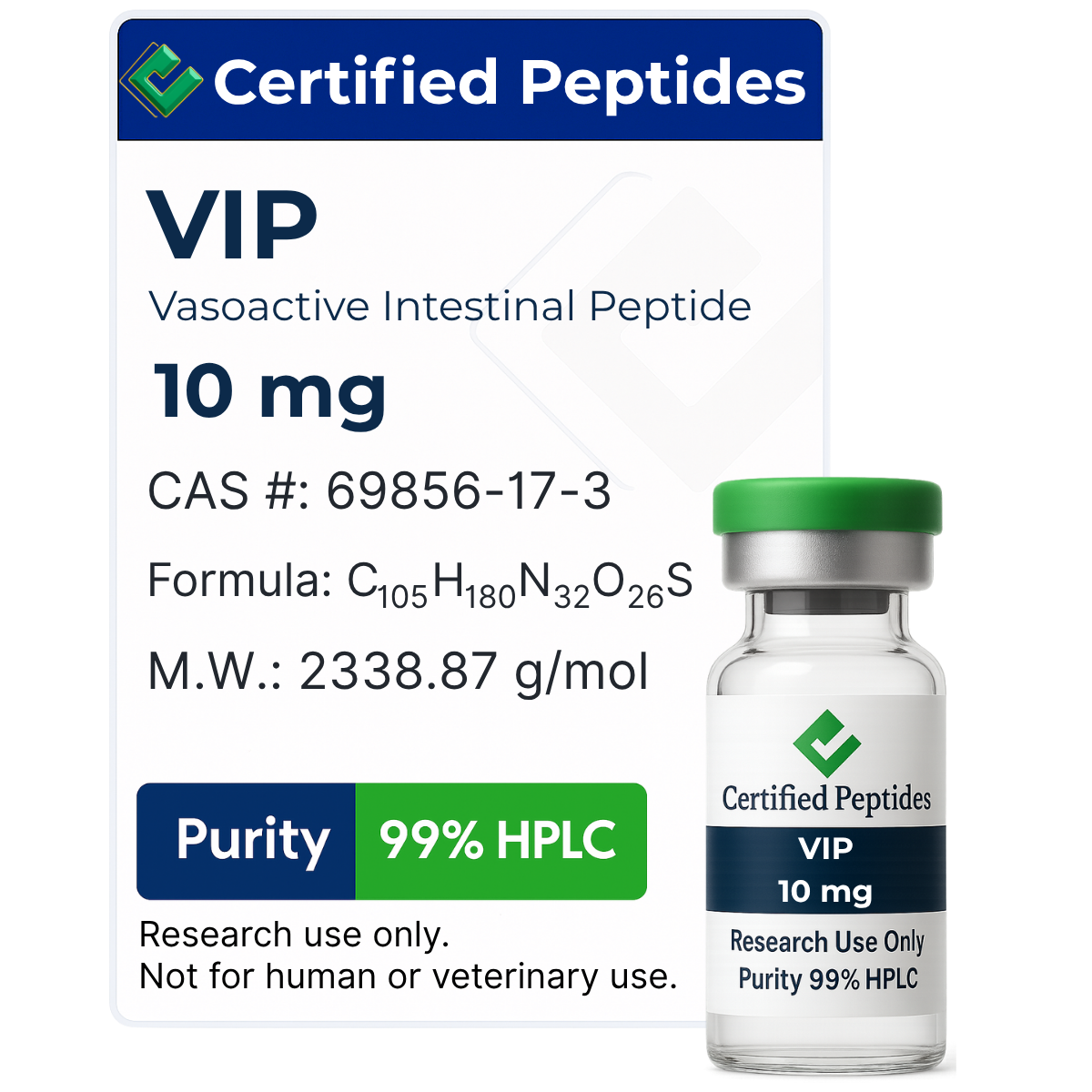
VIP 10 mg
VIP 10mg
149 in stock
Vasoactive Intestinal Peptide (VIP) is an endogenous 28–amino-acid neuropeptide widely distributed throughout the gastrointestinal tract, pancreas, lungs, cardiovascular system, and central nervous system. In research settings, VIP is recognized for its broad regulatory functions, including smooth-muscle relaxation, modulation of inflammatory signaling pathways, vasodilation, bronchodilation, and neuroprotection.
At the molecular level, VIP exerts its biological activity primarily through VPAC1 and VPAC2 receptors, which are highly expressed in pulmonary tissue as well as in various immune and neuronal cell populations. Engagement of these receptors influences cyclic AMP pathways, cytokine expression, vascular tone, and neuronal survival, making VIP a molecule of interest across multiple experimental domains.
VIP has been widely investigated in preclinical and translational research for its potential roles in:
- Pulmonary biology, including models of bronchoconstriction, pulmonary hypertension, and inflammatory lung conditions
- Immune modulation, with observed effects on cytokine regulation and immune cell signaling
- Gastrointestinal and inflammatory bowel research, due to its impact on motility, mucosal immunity, and epithelial integrity
- Neurological studies, particularly involving neuroinflammation, neuroprotection, and central nervous system homeostasis
Vasoactive Intestinal Peptide (VIP) is an endogenous 28–amino-acid neuropeptide widely distributed throughout the gastrointestinal tract, pancreas, lungs, cardiovascular system, and central nervous system. In research settings, VIP is recognized for its broad regulatory functions, including smooth-muscle relaxation, modulation of inflammatory signaling pathways, vasodilation, bronchodilation, and neuroprotection.
At the molecular level, VIP exerts its biological activity primarily through VPAC1 and VPAC2 receptors, which are highly expressed in pulmonary tissue as well as in various immune and neuronal cell populations. Engagement of these receptors influences cyclic AMP pathways, cytokine expression, vascular tone, and neuronal survival, making VIP a molecule of interest across multiple experimental domains.
VIP has been widely investigated in preclinical and translational research for its potential roles in:
- Pulmonary biology, including models of bronchoconstriction, pulmonary hypertension, and inflammatory lung conditions
- Immune modulation, with observed effects on cytokine regulation and immune cell signaling
- Gastrointestinal and inflammatory bowel research, due to its impact on motility, mucosal immunity, and epithelial integrity
- Neurological studies, particularly involving neuroinflammation, neuroprotection, and central nervous system homeostasis
Regulatory & Use
For laboratory research only. Not for human or veterinary use.
Related Products
-
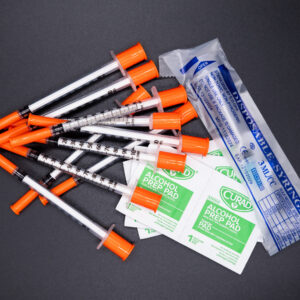
10 PACK SYRINGES ADD-ON
$10.00 -
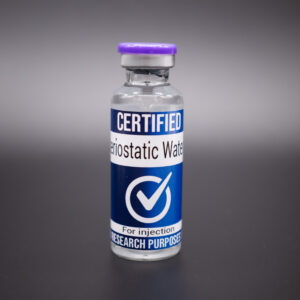
BACTERIOSTATIC WATER 30ML
$18.00 -
BACTERIOSTATIC WATER 30ML+ SYRINGE 10-PACK COMBO
Original price was: $28.00.$25.00Current price is: $25.00. -
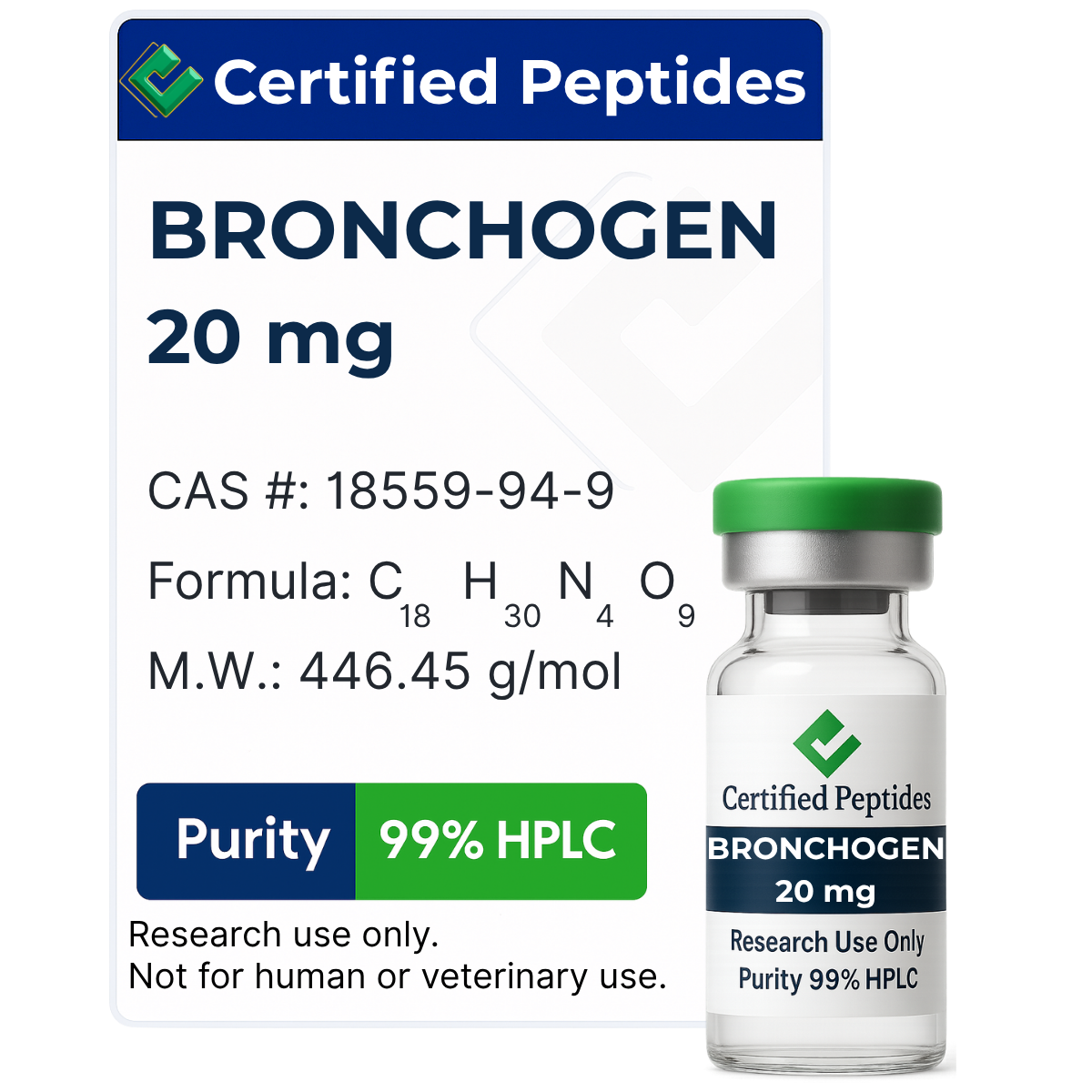
BRONCHOGEN 20MG
$105.00 -
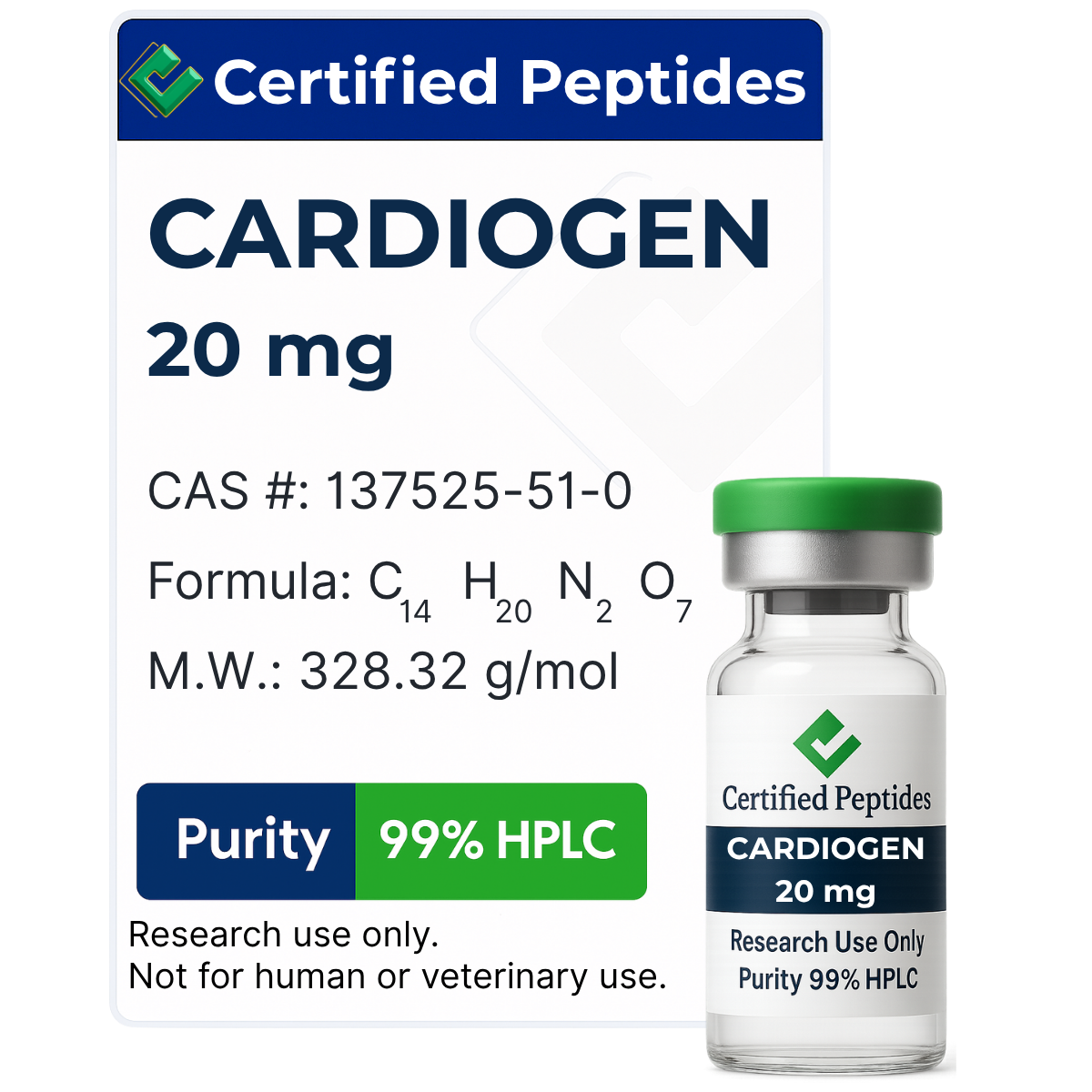
CARDIOGEN 20 MG
$105.00